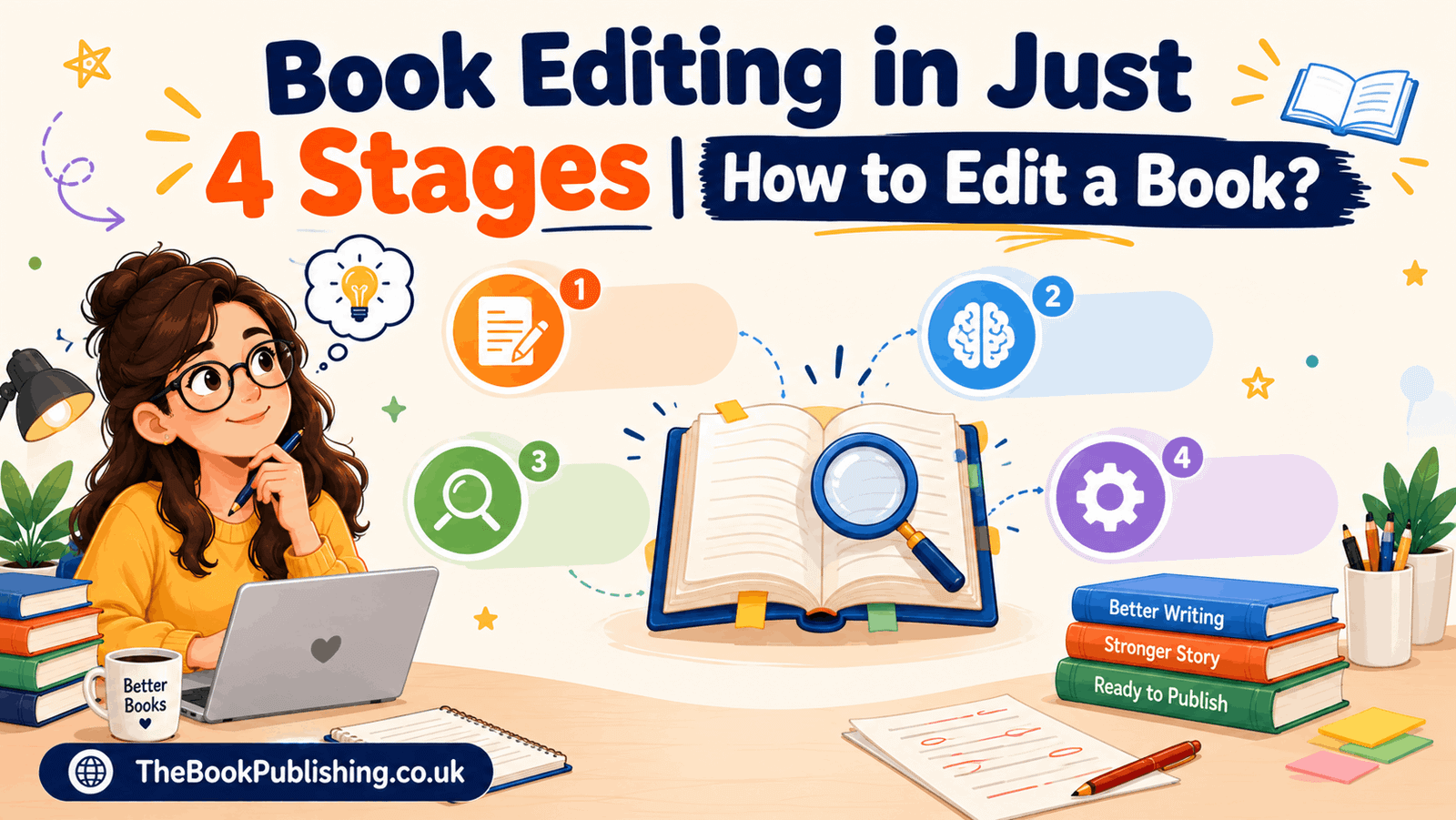
Book editing cannot be done without understanding all its 4 stages completely. Today, we will break down all 4 stages of book editing so you dont have to struggle with how to edit a book in the future. You will end up wasting your time if you skip any stage of book editing or do not follow the right order. This guide explores how professional book editing works and how you can edit your own books.
Key Takeaways
- Book editing is done in four stages: developmental, line, copy, and proofreading; always follow that order.
- Developmental editing refines the structure and story, and proofreading catches only surface errors.
- You can edit your own books by following 1 to 3 stages of book editing with discipline, but proofreading is the hardest task to do yourself.
- The UK’s Chartered Institute of Editing and Proofreading (CIEP) considers both editing and proofreading as separate professional skillset not the same or interchangeable tasks.
What Is Book Editing?
Book editing is a whole process that refines the book across four levels: structure, style, technical accuracy, and final polish before you publish it for readers. According to the CIEP, editing exists to make a text clear, consistent, correct, and complete. On the other hand, proofreading focuses on bringing a final quality check after editing and layout are done. Treating the two as the same task is one of the most common mistakes new authors make.
The 4 Stages of Book Editing
It’s time to breakdown all the major 4 stages of book editing, so stop scrolling for “how to edit a book” and read below:
1. Developmental Editing
The first stage of book editing is working on the book’s developmental level and giving it a clear plot, structure, pacing, characterization, and polishing the book’s purpose. Nothing in this step involves grammar; it’s about refining the argument or story. This is the first stage of book editing because restructuring later, after line editing, wastes hours polishing sections that may get cut.
2. Line Editing
The second stage of book editing targets the tone, voice, rhythm, and word choice in your books. This is where you need to get rid of chunky phrasing and repetitive language. Make sure you do not compromise the story or argument in the book while removing boring sentences.
3. Copyediting
The third stage of book editing is all about grammar, punctuation, spelling, and consistency, but keep a check against a style guide. You have to check the facts, formatting consistency, and catch contradictions in this step. For example: pay attention to a character’s eyes changing colour, a date that doesn’t add up.
4. Proofreading
The fourth and last stage of book editing is reposnbile to make your book ready to publish on Amazon KDP or wherever you want. This final check, done after layout, catches typos, formatting slips, and anything earlier rounds missed. Proofreading does seem a small stage of book editing, but readers notice this the most if you skip it.
The 4 Stages of Book Editing at a Glance
Let’s go through all these 4 stages of book editing once again in brief:
| Stage | Focus | Best Done By |
| Developmental editing | Structure, plot, pacing, argument | Professional editor (highest-impact stage) |
| Line editing | Sentence flow, tone, voice | Self-editable with discipline |
| Copyediting | Grammar, consistency, fact-checking | Self-editable with tools + a style sheet |
| Proofreading | Final typos and layout errors | Fresh eyes — ideally not the author |
How to Edit a Book Without a Proofreader or Editor
After exploring the 4 stages of book editing, many people ask how to edit a book without a proofreader or editor. If you cannot find a professional proofreader or an editor, then you have to do it yourself. Always follow the order of these 4 stages of book editing; don’t fix commas before you have fixed the structure.
- Read it like a stranger first. Go through the full manuscript without a pen, then note only what confused or bored you.
- Separate structure from sentences. Go through the full book’s developmental part by following the chapter order, keep consistent pacing, and fill out the gaps before touching individual lines.
- Read every sentence aloud. This catches awkward phrasing and rhythm problems faster than reading silently.
- Build a style sheet. Find all the mistakes in filling choices, character details, and formatting rules and correct them for consistent copywriting.
- Use software as a second pair of eyes, not a decision-maker. Grammar tools catch surface errors but won’t tell you if a scene drags.
- Leave time between passes. A few days’ distance makes errors far easier to spot.
- Proofread backwards. Reading sentences out of order forces you to see the words, not the story you expect to see.
The honest suggestion: When you proofread your own books or manuscript its seriously difficult because your brain subcorrects what it expects to read. It’s all interesting that even experienced proofreaders avoid proofreading their own books.
Common Self-Editing Mistakes to Avoid
Another thing you need to do while you understand the 4 stages of book editing, which is avoiding common mistakes most authors do:
- Copyediting before the structure is finalised, wasting effort on sentences that later get cut
- Treating “editing” and “proofreading” as one task, and stopping after only a light grammar pass
- Only relying on AI tools or spellcheck, which skips the context, tone, and factual consistency
- Skipping a style sheet, leading to inconsistent spelling, timelines, or character details
- Proofreading immediately after finishing edits, with no distance from the text
Final Thoughts
If you are editing your own books, follow the proper order: structure before style, style before grammar, grammar before the final polish. These are the 4 stages of book editing we discussed in our guide today. Self-editing does help you a lot, but a professional pass, for example, for developmental editing or proofreading, often makes the difference between a good manuscript and a publish-ready one. Whether it’s book formatting or book editing, they both play an important role in making them successful.
When You Should Hire a Professional Editor
If you are struggling to edit your own books, don’t hesitate to connect with some professional book editing and proofreading services. Especially if you are living in any city in the United Kingdom, you can reach out to TheBookPublishing.co.uk anytime for expert publishing services.
Frequently Asked Questions
How can I edit my book?
If you are confused about whether to hire somebody to edit your book or edit it yourself, follow the right order. First, go through the book’s structure, then correct the sentence style, then fix all the grammar errors, then work on plot consistency, and finally proofread with your friends’ help.
Can I edit a book without a proofreader?
Yes, you can edit your books without a professional proofreader, but this is not recommended if you want to publish your book with big goals in mind. Use a style sheet, read every sentence aloud, AND leave several days between passes. Another trick is to do backward reading to catch errors your brain would otherwise skip past.
What’s the difference between editing and proofreading?
Editing shapes and refines the content across structure, style, and grammar; proofreading is strictly the final check for errors after editing and layout are complete.
